Buy qou.eu ?
We are moving the project
qou.eu .
Are you interested in purchasing the domain
qou.eu ?
domain@kv-gmbh.de · 0541-91531010
Buy qou.eu ?
What is the learning theory of Jean Piaget?
Jean Piaget's learning theory, known as constructivism, emphasizes the active role of the learner in constructing their own understanding of the world. Piaget believed that children go through stages of cognitive development, and that their understanding of the world is shaped by their experiences and interactions with their environment. He proposed that children learn through assimilation, where they incorporate new information into their existing mental structures, and accommodation, where they modify their existing mental structures to fit new information. Piaget's theory has had a significant impact on education, as it emphasizes the importance of hands-on, experiential learning and the need for educators to understand the cognitive development of their students. **
Can you give a summary of Piaget?
Jean Piaget was a Swiss psychologist known for his work in child development and cognitive theory. He proposed that children go through four stages of cognitive development, from infancy to adolescence, and that they actively construct their understanding of the world through their experiences. Piaget's theory emphasizes the importance of play and exploration in a child's learning process, and he also highlighted the role of social interaction in cognitive development. His work has had a significant impact on the fields of psychology and education, and his ideas continue to influence our understanding of how children learn and grow. **

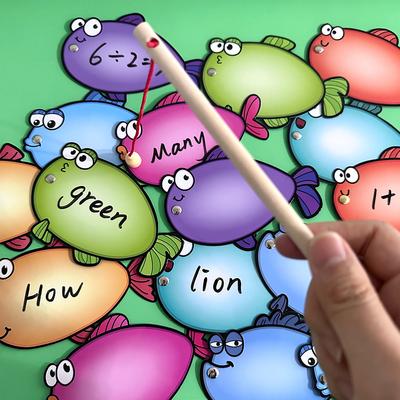
Similar search terms for Piaget
Top-Angebote
Products related to Piaget:
-
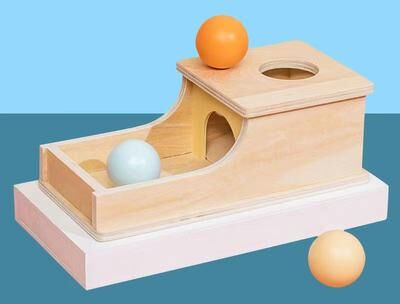
Tiny Tots Teens Trends Drawer Game Early Education Montessori Wooden Pitch Ball Box Preschool Learning Training Toy Drawer Game Early Education Montessori Wooden Pitch Ball Box Preschool Learning Training ToyThis Montessori Wooden Pitch Ball Box Drawer Game is a thoughtfully designed earlyeducation toy that transforms playtime into purposeful learning. Crafted for toddlers and preschoolers, it offers a handson, engaging way to support key developmental...39,97 $*Shipping: 0,00 $Secure redirect to the provider
-
Perfect Picks Market Kids Emotional Expression Mirror Early Education & Emotional Learning Toy For Toddlers pinkNurture your childs emotional intelligence with the Kids Emotional Expression Mirrora fun, interactive learning tool designed to help toddlers understand and manage their feelings. This innovative toy features six emotional expression cards and a...49,97 $*Shipping: 0,00 $Secure redirect to the provider
-
Tiny Tots Teens Trends Bright Color Montessori Wooden Toys, Adorable Caterpillar Puppet, KTV Adults, Kids Early Education Learning Toy For Boys Bright Color Montessori Wooden Toys, Adorable Caterpillar Puppet, KTV Adults, Kids Early Education Learning ToyEnhance Learning with Montessori Wooden Toys Introduce your child to the world of interactive learning with our Montessori Wooden Toys. Designed to stimulate both cognitive development and creativity, these toys are perfect for early education. The...44,97 $*Shipping: 0,00 $Secure redirect to the provider
-
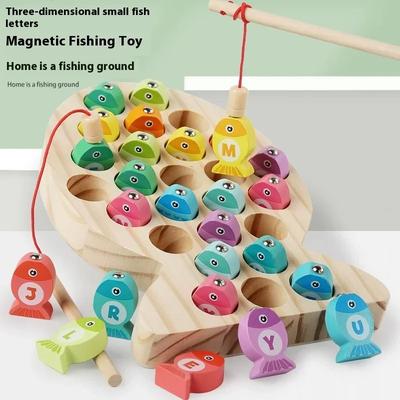
Inspire Select Wooden Montessori Fishing Toy Set Kids Number & Alphabet Learning Game For Early Education Training lettersMake learning fun and interactive with a playful educational experience. This Montessori fishing toy helps children develop essential skills while enjoying handson play. Designed for toddlers and young kids, this wooden learning toy combines...96,97 $*Shipping: 0,00 $Secure redirect to the provider


-
What did Jean Piaget mean by this statement?
Jean Piaget meant that children actively construct their understanding of the world through their experiences and interactions. He believed that children are not passive recipients of knowledge but rather actively engage with their environment to make sense of it. Piaget emphasized the importance of hands-on learning and exploration in the cognitive development of children. **
-
What is the difference between Kohlberg and Piaget?
Kohlberg and Piaget were both developmental psychologists who focused on cognitive development, but they studied different aspects of it. Piaget's theory of cognitive development focused on how children's thinking processes evolve as they grow, while Kohlberg's theory of moral development focused on how individuals' moral reasoning develops over time. Additionally, Piaget's stages of cognitive development are more concrete and focused on childhood, while Kohlberg's stages of moral development extend into adulthood and are more abstract. Overall, Piaget's theory is more about cognitive development in general, while Kohlberg's theory specifically addresses moral development. **
-
What did Jean Piaget mean by the statement?
Jean Piaget meant that children actively construct their understanding of the world through their experiences and interactions. He believed that children are not passive recipients of knowledge but rather engage in the process of learning by exploring, questioning, and experimenting. Piaget emphasized the importance of cognitive development and how children's thinking evolves as they grow and learn. This statement highlights the idea that children play an active role in shaping their own intellectual development. **
-
What do Kohlberg and Piaget have in common?
Kohlberg and Piaget both focused on the development of moral reasoning and cognitive development in children. They both proposed stage theories to explain the progression of moral and cognitive development, with each stage building upon the previous one. Additionally, both theorists emphasized the role of social interactions and experiences in shaping children's moral and cognitive development. Overall, Kohlberg and Piaget shared a common interest in understanding the processes through which children develop their moral and cognitive abilities. **

What does Jean Piaget mean with this statement?
Jean Piaget means that children are active learners who construct their understanding of the world through their experiences and interactions. He emphasizes the importance of hands-on experiences and exploration in the learning process, as children build their knowledge by actively engaging with their environment. This statement highlights the idea that children are not passive recipients of information, but rather active participants in their own learning and development. Piaget's theory of cognitive development suggests that children go through stages of mental growth as they interact with the world around them, constantly building and refining their understanding of concepts. **
What are the differences between Piaget and Kohlberg?
Piaget and Kohlberg were both influential developmental psychologists, but they focused on different aspects of human development. Piaget's theory of cognitive development focused on how children's thinking and understanding of the world changes as they grow, while Kohlberg's theory of moral development focused on how individuals' understanding of right and wrong evolves over time. Additionally, Piaget's stages of cognitive development are more focused on concrete cognitive abilities, while Kohlberg's stages of moral development are more focused on abstract moral reasoning. Overall, Piaget's work is more focused on cognitive development, while Kohlberg's work is more focused on moral development. **
Top-Angebote
Products related to Piaget:
-
Market Central Felt Finger Numbers Math Toy Toddler Counting Early Education Learning Game Felt Finger Numbers Math Toy Toddler Counting Early Education Learning GameThis toddler Montessori felt math toy provides an interactive way for young children to learn basic numbers and early counting skills. Designed to build foundational math skills through handson play, it helps develop early childhood intelligence and...34,97 $*Shipping: 0,00 $Secure redirect to the provider
-
Perfect Picks Market Montessori Reusable Learning Cards Set For Kids Early Education Writing Practice Game Montessori Reusable Learning Cards Set For Kids Early Education Writing Practice GameTurn everyday learning into a fun, handson experience with these Montessori toys designed to spark curiosity and creativity. This engaging set of reusable cards helps young children build essential skills through play, making it perfect for early...39,97 $*Shipping: 0,00 $Secure redirect to the provider
-
Tiny Tots Teens Trends Drawer Game Early Education Montessori Wooden Pitch Ball Box Preschool Learning Training Toy Drawer Game Early Education Montessori Wooden Pitch Ball Box Preschool Learning Training ToyThis Montessori Wooden Pitch Ball Box Drawer Game is a thoughtfully designed earlyeducation toy that transforms playtime into purposeful learning. Crafted for toddlers and preschoolers, it offers a handson, engaging way to support key developmental...39,97 $*Shipping: 0,00 $Secure redirect to the provider
-
Perfect Picks Market Kids Emotional Expression Mirror Early Education & Emotional Learning Toy For Toddlers pinkNurture your childs emotional intelligence with the Kids Emotional Expression Mirrora fun, interactive learning tool designed to help toddlers understand and manage their feelings. This innovative toy features six emotional expression cards and a...49,97 $*Shipping: 0,00 $Secure redirect to the provider
-
What is the learning theory of Jean Piaget?
Jean Piaget's learning theory, known as constructivism, emphasizes the active role of the learner in constructing their own understanding of the world. Piaget believed that children go through stages of cognitive development, and that their understanding of the world is shaped by their experiences and interactions with their environment. He proposed that children learn through assimilation, where they incorporate new information into their existing mental structures, and accommodation, where they modify their existing mental structures to fit new information. Piaget's theory has had a significant impact on education, as it emphasizes the importance of hands-on, experiential learning and the need for educators to understand the cognitive development of their students. **
-
Can you give a summary of Piaget?
Jean Piaget was a Swiss psychologist known for his work in child development and cognitive theory. He proposed that children go through four stages of cognitive development, from infancy to adolescence, and that they actively construct their understanding of the world through their experiences. Piaget's theory emphasizes the importance of play and exploration in a child's learning process, and he also highlighted the role of social interaction in cognitive development. His work has had a significant impact on the fields of psychology and education, and his ideas continue to influence our understanding of how children learn and grow. **
-
What did Jean Piaget mean by this statement?
Jean Piaget meant that children actively construct their understanding of the world through their experiences and interactions. He believed that children are not passive recipients of knowledge but rather actively engage with their environment to make sense of it. Piaget emphasized the importance of hands-on learning and exploration in the cognitive development of children. **
-
What is the difference between Kohlberg and Piaget?
Kohlberg and Piaget were both developmental psychologists who focused on cognitive development, but they studied different aspects of it. Piaget's theory of cognitive development focused on how children's thinking processes evolve as they grow, while Kohlberg's theory of moral development focused on how individuals' moral reasoning develops over time. Additionally, Piaget's stages of cognitive development are more concrete and focused on childhood, while Kohlberg's stages of moral development extend into adulthood and are more abstract. Overall, Piaget's theory is more about cognitive development in general, while Kohlberg's theory specifically addresses moral development. **
Similar search terms for Piaget
-
Tiny Tots Teens Trends Bright Color Montessori Wooden Toys, Adorable Caterpillar Puppet, KTV Adults, Kids Early Education Learning Toy For Boys Bright Color Montessori Wooden Toys, Adorable Caterpillar Puppet, KTV Adults, Kids Early Education Learning ToyEnhance Learning with Montessori Wooden Toys Introduce your child to the world of interactive learning with our Montessori Wooden Toys. Designed to stimulate both cognitive development and creativity, these toys are perfect for early education. The...44,97 $*Shipping: 0,00 $Secure redirect to the provider
-
Inspire Select Wooden Montessori Fishing Toy Set Kids Number & Alphabet Learning Game For Early Education Training lettersMake learning fun and interactive with a playful educational experience. This Montessori fishing toy helps children develop essential skills while enjoying handson play. Designed for toddlers and young kids, this wooden learning toy combines...96,97 $*Shipping: 0,00 $Secure redirect to the provider
-
Basic Fun K'NEX Education Maker Kit Large 863-Piece Construction Set for STEAM Learning and Building - 863-pieceGive young makers the freedom to invent, experiment, and build with the K'NEX Education Maker Kit Large. This substantial construction set contains 863 classic K'NEX pieces, including colorful rods, connectors, wheels, gears, and other components for creating a wide variety of models. Designed for open-ended exploration, the kit encourages children to think like engineers as they test structures, investigate movement, and develop their own designs. The included 64-page ideas booklet provides inspiration for up to 100 different models, while the versatile parts can also be used for imaginative free-building beyond the suggested projects. The large set is suitable for collaborative learning, with enough material for up to 12 children to work together on creative STEAM activities. It can support lessons and activities involving science, technology, engineering, and mathematics while helping to develop problem-solving, spatial awareness, hand-eye coordination, and fine motor skills.69,76 £*Shipping: 0,00 £Secure redirect to the provider
-
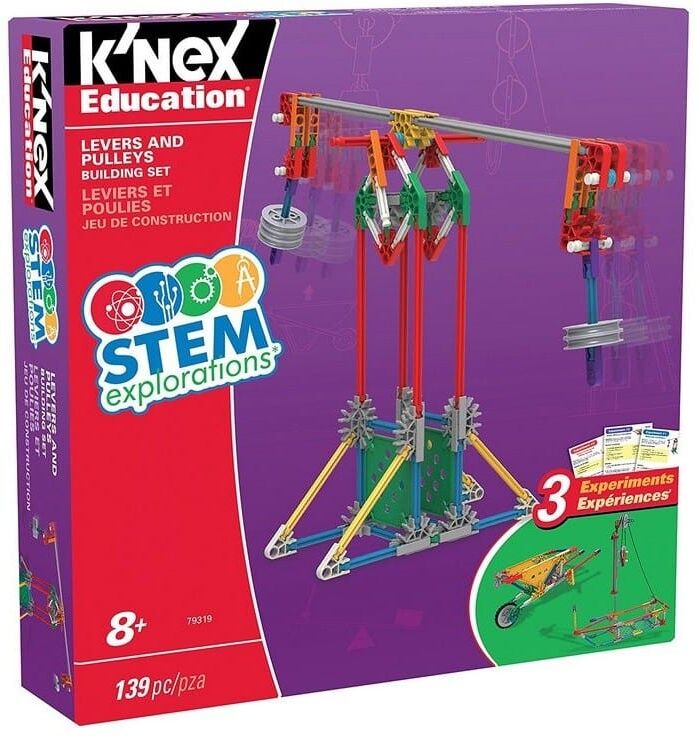
K'NEX Education STEM Explorations Levers & Pulleys Building Set - 139-Piece Construction Toy for Kids - Ages 6-12 - STEM Learning KitExplore the science of simple machines with the K'NEX Education STEM Explorations Levers and Pulleys Building Set. This hands-on construction kit combines creative building with practical STEM learning, helping children understand how everyday mechanical systems work. Using the colourful K'NEX rods, connectors, and specialist components, children can build three fully functioning models: a balance, a wheelbarrow, and a sailboat. Each model demonstrates different principles, giving young learners the opportunity to investigate lever classes, pulley systems, resistance, effort, and mechanical advantage in an engaging way. The set contains 139 pieces and is suitable for one child or a team of two. Once the models are built, three follow-up experiments encourage children to test, compare, and adjust their designs. The accompanying step-by-step instructions and experiment guidance support independent learning, home education, and classroom activities.9,60 £*Shipping: 3,95 £Secure redirect to the provider
-
What did Jean Piaget mean by the statement?
Jean Piaget meant that children actively construct their understanding of the world through their experiences and interactions. He believed that children are not passive recipients of knowledge but rather engage in the process of learning by exploring, questioning, and experimenting. Piaget emphasized the importance of cognitive development and how children's thinking evolves as they grow and learn. This statement highlights the idea that children play an active role in shaping their own intellectual development. **
-
What do Kohlberg and Piaget have in common?
Kohlberg and Piaget both focused on the development of moral reasoning and cognitive development in children. They both proposed stage theories to explain the progression of moral and cognitive development, with each stage building upon the previous one. Additionally, both theorists emphasized the role of social interactions and experiences in shaping children's moral and cognitive development. Overall, Kohlberg and Piaget shared a common interest in understanding the processes through which children develop their moral and cognitive abilities. **
-
What does Jean Piaget mean with this statement?
Jean Piaget means that children are active learners who construct their understanding of the world through their experiences and interactions. He emphasizes the importance of hands-on experiences and exploration in the learning process, as children build their knowledge by actively engaging with their environment. This statement highlights the idea that children are not passive recipients of information, but rather active participants in their own learning and development. Piaget's theory of cognitive development suggests that children go through stages of mental growth as they interact with the world around them, constantly building and refining their understanding of concepts. **
-
What are the differences between Piaget and Kohlberg?
Piaget and Kohlberg were both influential developmental psychologists, but they focused on different aspects of human development. Piaget's theory of cognitive development focused on how children's thinking and understanding of the world changes as they grow, while Kohlberg's theory of moral development focused on how individuals' understanding of right and wrong evolves over time. Additionally, Piaget's stages of cognitive development are more focused on concrete cognitive abilities, while Kohlberg's stages of moral development are more focused on abstract moral reasoning. Overall, Piaget's work is more focused on cognitive development, while Kohlberg's work is more focused on moral development. **
* All prices are inclusive of VAT and, if applicable, plus shipping costs. The offer information is based on the details provided by the respective shop and is updated through automated processes. Real-time updates do not occur, so deviations can occur in individual cases. ** Note: Parts of this content were created by AI.